
I cleaned out my jewelry box last month. After two decades of “oh, that’s cute” impulse buys, I expected a treasure hunt. Instead, I found a graveyard of green-tinged chains and earrings missing their backs. Three pieces survived. All three were older than my teenagers.
That got me thinking about what actually makes jewelry last, and why the pieces we reach for at 40 are almost never the ones that felt exciting at 20.
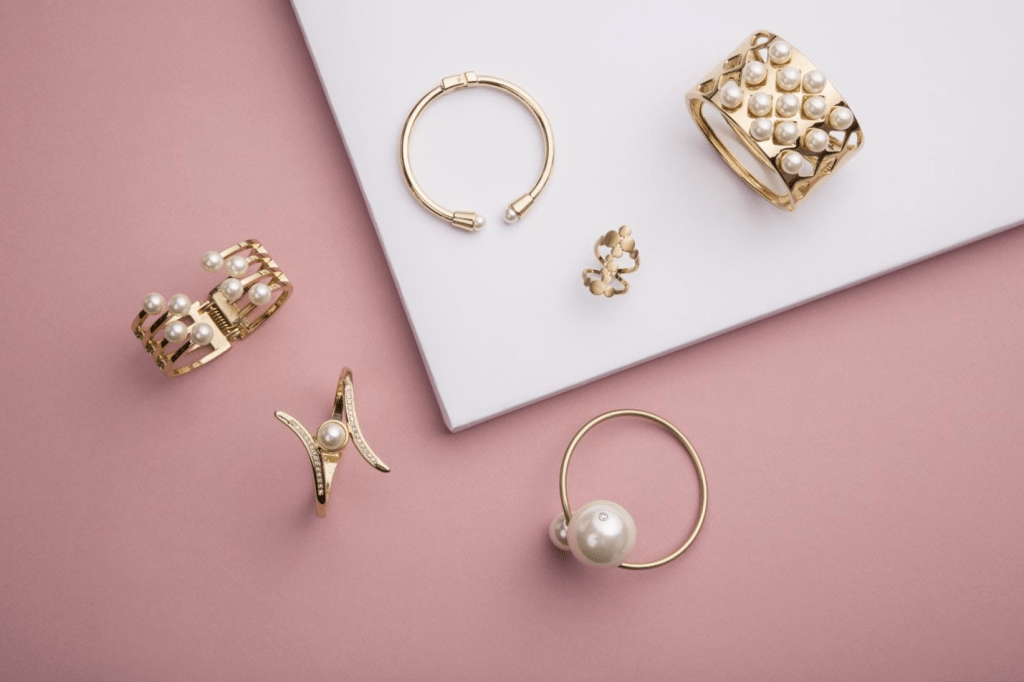
Trendy fades. Timeless doesn’t.
Here’s the thing nobody tells you when you’re buying your fifth “statement piece” of the season: trends are designed to expire. That’s the whole business model. The chunky resin, the mixed-metal everything, the color of the year: all of it looks dated in eighteen months, and half the time it’s already tarnishing before then.
The pieces that survive are boring in the best way. A plain gold hoop. A single stud. A chain with no gimmick. They don’t try to be the main character, which is exactly why you still want them a decade later.
I’ve made my peace with it. I’d rather own five things I actually wear than forty things I don’t.
The pieces that never go out of style
If I were starting a jewelry collection from scratch today, knowing what I know now, this is the short list I’d build around.
Gold hoops. Small to medium, nothing enormous. They go with a school pickup and a wedding equally well, which is more than I can say for most of my closet.
Simple studs. Diamond if you’re lucky, but a clean pearl or a plain gold ball does the same job. Studs are the jewelry version of a white t-shirt: quiet, and impossible to get wrong.
A fine gold chain. The kind you forget you’re wearing. Layer it, wear it alone, sleep in it. It just works, year after year.
A gold link bracelet. This is the one I underestimated for years. Mine is Goldmania’s 14k Gold Pear Shaped Link Chain Bracelet, a solid gold piece with pear-shaped links that I keep coming back to because it’s substantial without being flashy. It sits on my wrist through dishes, carpool, and dinner out without me ever thinking about it. Everyday, but never throwaway.
One good ring. A signet, a plain band, something with actual weight to it. Not the ring you swap out with your mood. The one that quietly becomes part of your hand.
Notice what’s missing from that list. No trend. No “it” piece. Just shapes that have looked right for a hundred years and will look right for a hundred more.

Why “real” beats “more” every time
This is the part where my eco-minded mom side shows up, so bear with me.
For most of my adult life I bought jewelry the way I bought fast fashion: cheap, often, and without much thought. Then I did the math, and it stopped being cute. Ten plated bracelets at $30 each is $300 in the trash inside two years, because plated and filled jewelry chips, fades, and turns your wrist green. One solid gold piece for that same total is still on your wrist in twenty years, and probably on your daughter’s after that.
Solid gold doesn’t tarnish. It doesn’t chip. You can wear it in the shower, in the ocean, through a decade of ordinary life, and it looks the same as the day you got it. “Not plated, not filled, just gold” stopped sounding like a slogan to me somewhere along the way. It’s the difference between owning something and renting it until it breaks.
Buy less. Buy better. I say it to my kids about clothes, and I finally started saying it to myself about jewelry.
The pieces you actually pass down
Here’s the real test of timeless: would you hand it to someone you love?
My grandmother left me a thin gold chain. Nothing fancy, nothing valuable enough to bother insuring. I’ve worn it more than anything I’ve ever bought for myself. That’s the whole point. Real gold turns into a story you pass down, not an accessory you replace.
My daughter is fifteen. Somewhere down the line, one of these pieces is going to be hers, and it won’t be one of the plastic ones. It’ll be the gold one that outlasted every trend I ever fell for.
That’s what timeless actually means. Not “never goes out of style.” It means still here, still yours, long after the trends that felt so urgent have been forgotten.
So the next time you’re tempted by the shiny thing that’s everywhere this season, ask one question: will you still want it in ten years? If the answer is no, put it back. Save the money, and put it toward one real piece you’ll never take off.
Frequently Asked Questions
Is 14k gold okay for everyday wear?
Yes, and it’s honestly the sweet spot. 14k is durable enough to survive daily life without the softness of higher-karat gold, and it holds up to water, sweat, and general chaos. It’s the karat I’d point most people toward for a piece they plan to wear constantly.
Is solid gold really worth the extra cost over gold-plated?
Over time, absolutely. Plated jewelry looks similar on day one, but the thin gold layer wears off and leaves you with a discolored base metal within a year or two. Solid gold holds its look and its value indefinitely. You pay once instead of paying again and again.
How do I keep gold jewelry from tarnishing?
Real solid gold barely tarnishes to begin with, which is a big part of the appeal. A quick wipe with a soft cloth and the occasional warm-water rinse keeps it bright. The green-wrist problem you might remember from cheaper jewelry comes from plated or mixed metals, not from solid gold.
What’s a good first “real gold” piece to invest in?
Start with whatever you’ll wear the most. For most people, that’s a fine chain or a simple bracelet you never have to take off. Pick the piece that fits your actual daily life, not the flashiest one in the case. You’ll get more out of one thing you love than five things you tolerate.

Leave A Comment